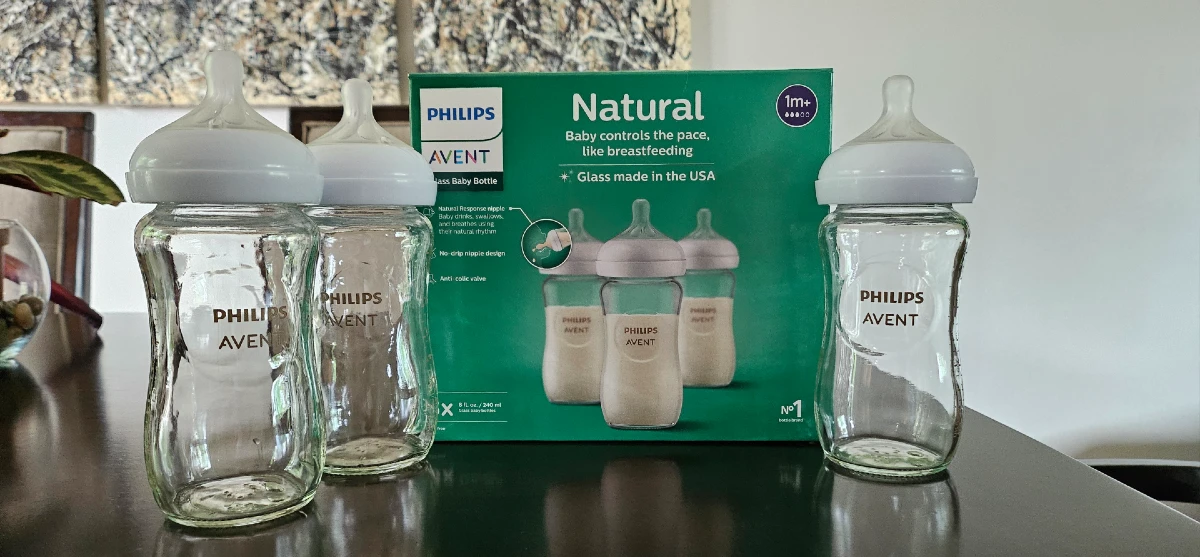
Let’s face it — becoming a parent is like being thrown into the deep end of a pool you’ve never swum in, with a baby strapped to your chest. Bottles? Formula ratios? Sterilization? It feels like you need a PhD just to feed your child. I’ve been there — shaky hands, second-guessing every step, wondering if the bottle is tilted just right. In this Philips Avent bottle review, I’m sharing the one bottle that made all the difference for us: the Philips Avent Natural. It became our saving grace.
IN THIS POST
How to Use Philips Avent Bottles
How to Assemble Philips Avent Bottles
How to Sterilize Philips Avent Glass Bottles
Are Philips Avent Bottles Dishwasher Safe
Do Philips Avent glass bottles break
Do Philips Avent Bottles Leak
Are Philips Avent Bottles Good for Breastfed Babies
Are Philips Avent Bottles Microwave Safe
How to Hold Philips Avent Natural Bottles
Are Philips Avent Bottles Anti-Colic
Do Philips Avent Bottles Cause Gas
How to Use Philips Avent Bottles: A First-Time Parent’s Guide (With a Dash of Real Talk)
Whether you’re a seasoned parent or a bleary-eyed newbie, here’s what helped us on how to make the most of these beautifully designed bottles that are as functional as they are chic.
Wash and Sterilize
Before using the bottle, wash and sterilize every part. It’s a simple step that makes a big difference for your baby’s delicate immune system. You can boil the parts (see the sterilization section below) or use a sterilizer—whatever works best for your routine.
Fill It Up Right
When you’re ready to serve up some liquid gold, whether it’s breastmilk or formula, you can start by pouring in the amount you want to feed. If you’re using baby formula, you want to pour the water first, then add powder. This helps ensure an accurate measurement and a well-mixed bottle. Most formulas follow a one scoop per ounce of water rule, but it’s always best to double-check the label—every brand can be a little different.
Getting the water-to-formula ratio wrong can affect your baby’s delicate electrolyte balance, and potentially cause harm. Once everything’s measured, you’re one step closer to a happy, well-fed baby.
Choose the Right Nipple Size
Every baby is unique. Philip Avent Natural Response nipple offers 5 different sizes:
Flow 1: 0 Month
Flow 2: 0 Month and older
Flow 3: 1 Month and older
Flow 4: 3 months and older
Flow 5: 6 months and older
As you go up in nipple size, the flow also goes up as well. Pick a nipple flow that matches your baby’s age and feeding style, but know that it might take a little experimenting to find the best fit. That’s completely normal.
For our baby, we skipped Flow 1 and started with Flow 2 when she was a newborn. However, when she was 3 months old, we were still using Flow 3 for a while before moving onto Flow 4.
Mix Without the Mess
If you’re preparing formula, shaking the bottle usually works best to avoid clumps—most brands recommend against stirring. So give your bottle a firm shake, no utensils needed, and always check your formula’s directions for the safest method.
Warm It Up (or Don’t)
Some babies love warm milk, while others are happy with room temp. We used the MomCozy bottle warmer, which fits Philips Avent bottles perfectly. But our little one was flexible—warming didn’t last long in our house.
Important Tip: Perfect the AirFree Vent Position
This seems to be a common usage error when it comes to the Philip Avent bottles. To help reduce colic and gas, make sure the nipple’s vent hole is aligned with your baby’s nose. Even if milk covers it, it will still function as intended.
Feed With Love
When it’s time to feed using the Philip Avent bottle, it’s recommended to gently guide the nipple to the baby’s mouth and allow them to latch onto the nipple to start drinking. Then tilt the bottle so the nipple stays full of milk.
What helped me was gently tapping our baby’s lips with the nipple to encourage her to open her mouth. When she did, I would then place the top of the nipple inside her mouth and allow her to suck in the rest of hte nipple so she get the latch she perfers. I’ve noticed that when I push the nipple in, instead of allowing her to suck and latch, she tends to choke and cough up a bit.
A Friendly Recommendation
If you can, try to stay present during feedings—especially when your baby is tiny. I’ve found that when I glance at my phone or have the TV on, I sometimes miss important cues: a little squirm that means she needs to burp, or the moment when the nipple isn’t full of milk anymore and she starts swallowing air (which can’t feel good).
Plus, babies are curious. Screens and bright lights can easily distract them, turning feeding time into a bit of a struggle.
It’s not always easy, especially during those 2 a.m. feedings when you’re running on fumes. But these quiet, snuggly moments—the way their tiny fingers wrap around yours, those sleepy sighs, the soft weight of their head—are the ones that stay with you. So take a deep breath, soak it in. Know that this simple act of feeding is one of the most meaningful things you’re doing right now. These moments won’t last forever, and it won’t be long until your little one is feeding on their own.
Now, here’s where things got a little snug—literally. Our room, while charming, was on the smaller side. Finding space for our two big suitcases felt like playing a game of real-life Tetris, and the limited closet space made it tricky to unpack what we needed for the day. If you’re someone who loves to spread out or needs a little breathing room, this might be something to consider.
The bed itself was comfortable, but here’s the thing—my husband and I are firm mattress people, and this one leaned a little too soft for our liking. It wasn’t a dealbreaker, but if you’re particular about mattress firmness, keep that in mind.
How to Assemble Philips Avent Bottles
Thank goodness assembling Philips Avent bottles is refreshingly simple. It’s hard enough being a first-time mom with little to no sleep, we don’t need bottles that require a PhD to put it together. Within the kit, you should have:
- Bottles
- Nipples
- Rings
- Caps
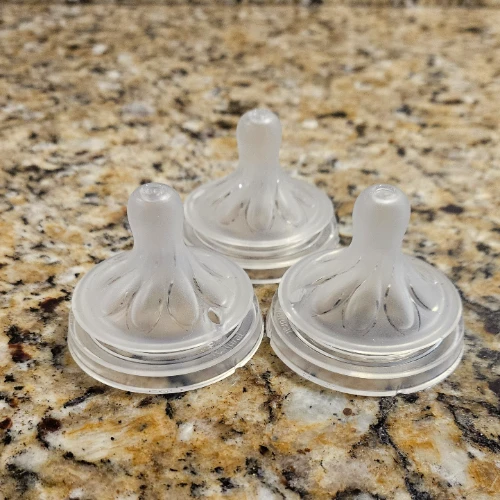
Nipples
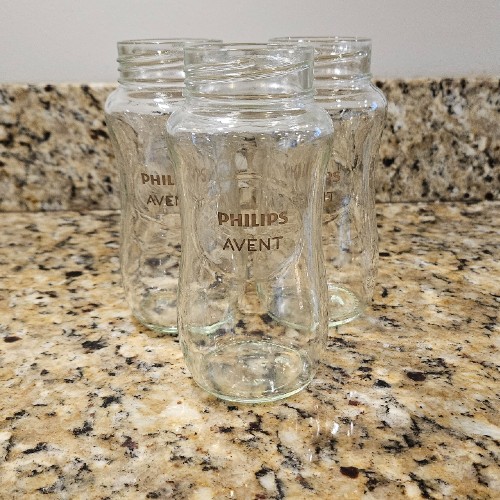
Glass Bottles
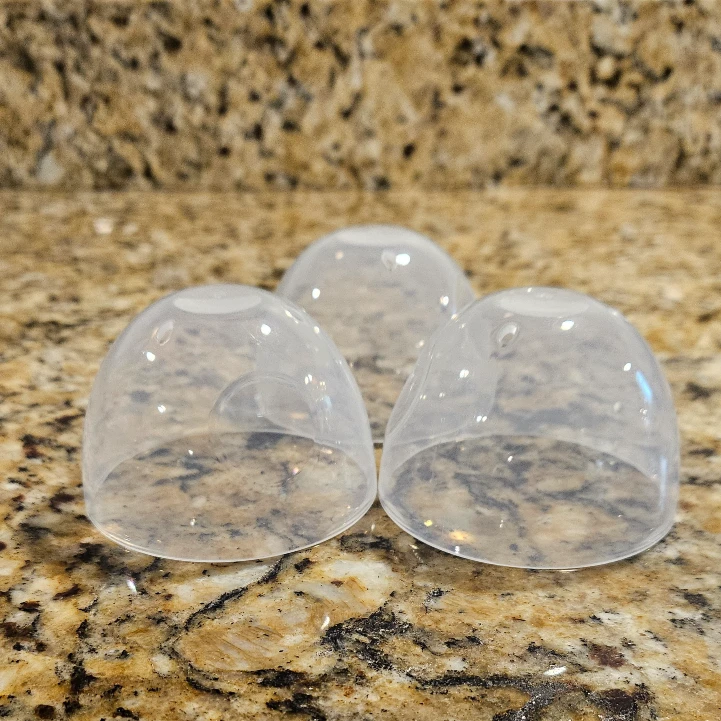
Caps
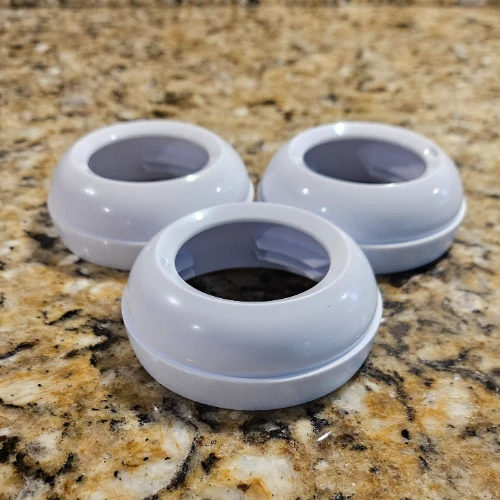
Rings
Start by inserting the nipple into the ring. Be sure to pull the nipple all the way through until the base sits flush against the ring. As easy as it is to assemble the bottles, even I got this wrong (blame it on sleep deprivation). I learned this the hard way—if it’s not fully pulled through, it can leak or collapse during feeding.
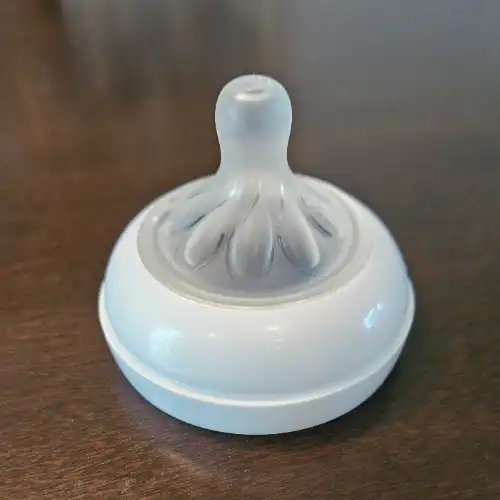
✅ Correct
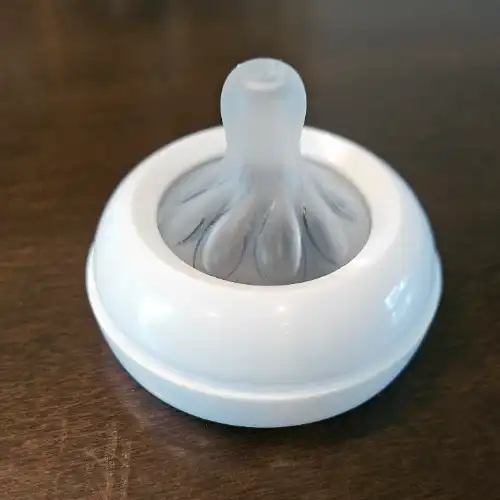
❌ Incorrect
Once the nipple is properly in place, just screw the ring onto the bottle. Top it off with the cap if you’re prepping bottles in advance or storing them for later.
Side note: Before assembling anything, always sterilize each part if it’s your baby’s first time using the bottle per the manufacturer’s recommendation.
How to Sterilize Philips Avent Glass Bottles
Sterilizing your Philips Avent glass bottles is a simple but essential step—especially before the first use.
Here’s how to do it the old-fashioned way:
- Grab a large pot that can comfortably hold all the parts.
- Fill it with enough water to fully submerge the bottles, nipples, rings, and caps.
- Place the pot on the stove and bring the water to a rolling boil.
- Once boiling, gently add all the bottle parts—make sure everything is separated (not assembled). This ensures each part gets properly sterilized.
- Boil for 5 minutes.
- When time’s up, turn off the heat and carefully remove the parts (they’ll be hot!). For me, I used tongs to grab each part out.
- Let them dry on a clean surface or drying rack, or use a clean towel to dry them off after they’ve cooled down.
Prefer a more hands-off approach? You can absolutely use a bottle sterilizer instead. Philips Avent even makes one designed specifically for their bottles, which is super convenient if you’re planning to sterilize regularly.
Are Philips Avent Bottles Dishwasher Safe?
Yes, Philips Avent bottles are dishwasher safe, which can be a lifesaver when you’re running on fumes and looking for any shortcut that gives you a few minutes back. But let’s be honest: babies eat a lot. Ours feeds every 2 to 3 hours, which means we usually run out of bottles long before we’re ready to run the dishwasher.
Personally, I also felt a little uneasy about using regular dish detergents and rinse aids. I worried about potential residue and didn’t love the idea of my baby possibly ingesting any lingering chemicals. So I opted to hand-wash our bottles using a gentler, low-tox cleaner.
That said, I don’t wash each bottle after every single feed. Instead, I batch-wash several at a time throughout the day. It’s more efficient and feels a little less overwhelming.
So yes, you can toss them in the dishwasher. But if you’re like me and prefer a more hands-on, low-tox approach, hand washing works just as well.
Thoughtful Design That Works for You
When it comes to baby bottles, the Philips Avent design really stands out. It’s sleek, gently curved, and feels thoughtfully made—like the little black dress of baby bottles: timeless, flattering, and always a good idea.
Do Philips Avent glass bottles break?
The glass version in particular feels solid and high quality. Not too heavy, but definitely sturdy. The glass doesn’t have that fragile, paper-thin feel some bottles do. And believe me, I’ve tested its durability more times than I’d like to admit. I’m not the most graceful person—Mike jokes that he should follow me around with a toolbox—and I’ve already knocked these bottles over onto our granite countertops twice in the first two months. Both times, they survived without a single crack. I’m honestly amazed.
Quick update: A few days later after I wrote this review, I had accidentally knocked a bottle that was stored in a cabinet which of course, fell and crashed onto our granite countertop. Needless to say, the glass bottle didn’t make it. However, I still stand by and say the glass bottles are sturdy. Maybe just don’t store them in a top cabinet like I did.
Do Philips Avent Bottles Leak?
A lot of reviews mention issues with leaking, particularly during feedings. Luckily, we haven’t experienced this problem ourselves. The only time we’ve noticed any leaks was when we were shaking formula, and the nipple or ring wasn’t tightened properly. A simple check to ensure everything is securely fastened usually prevents any leaks. So, just be sure to double-check the fit before shaking, and you should be good to go!
Are Philips Avent Bottles Good for Breastfed Babies?
If you’re planning to both breastfeed and bottle feed, Philips Avent bottles are a great choice. I specifically chose them because they’re designed to help minimize nipple confusion—and in our case, they really did.
I was able to switch between breast and bottle without much trouble. Our baby did eventually prefer the bottle, but to be fair, I was dealing with a low milk supply and a slow letdown. She’d get a little frustrated at the breast, and I can’t blame her—waiting for milk when you’re hungry is tough, even for a tiny human. The bottle made things easier for both of us during those moments, and the smooth transition helped reduce a lot of stress.
If you’re navigating the delicate balance of combo feeding, these bottles might just help make it a little more seamless. And whatever your feeding journey looks like, just know you’re doing an incredible job.
Are Philips Avent Bottles Microwave Safe?
Yes, Philips Avent bottles are microwave safe—perfect for those moments when you’re in a rush and need a quick fix. Just be sure to remove the nipple, cap, and ring before popping the bottle in the microwave.
That said, there are a few things to keep in mind. Microwaving can cause uneven heating, creating hot spots that might burn your baby’s mouth. It can also reduce the nutritional value of breastmilk or formula, which is why it’s not the ideal method for warming milk.
If you can, opt for gentler alternatives like a bottle warmer or placing the bottle in a bowl of warm water for a few minutes. These methods take a little longer but are safer and more effective at preserving nutrients.
And if the microwave is your only option? Give the milk a good stir afterward to help evenly distribute the heat.
Economically and Sustainably Friendly
I also love how practical they are. Instead of buying entirely new bottles every time your baby grows, you can just switch out the nipple sizes and keep using the same bottle. It’s an eco-friendly, budget-friendly option that reduces waste and clutter. A small but meaningful win for parents who are already juggling so much.
While we personally chose the glass version for peace of mind, Philips Avent also offers BPA-free plastic bottles if that’s your preference. No matter which material you choose, the design is comfortable to hold and easy on the wrists, which you’ll definitely appreciate during those longer feeding sessions.
How to Hold Philips Avent Natural Bottles
If you’re a first-time parent like I was, it’s totally okay if you’re unsure how to hold or feed your baby at first. I’ll be honest—those first few tries? I struggled. I felt clumsy, unsure, and honestly, like maybe I wasn’t cut out for this. But that couldn’t be further from the truth. You’re not failing—you’re learning. Just like your baby is figuring out this big new world, you’re figuring out this big new role. And let’s be real, most of us didn’t grow up surrounded by babies, and no one really teaches you how to feed a newborn (certainly not home ec class—if that even exists anymore!).
Here’s what helped me figure it out:
- I hold my baby in my non-dominant arm (for me, that’s the left), with her head nestled comfortably in the crook of my elbow.
- I hold the Philips Avent bottle in my dominant hand like I would a cup—thumb on one side toward me, fingers wrapped around the other, and the base of the bottle gently resting between them.
- As she drinks, I can slightly lift the bottle to keep the nipple full of milk—this helps prevent her from swallowing air.
- A small but helpful tip: make sure the air vent hole on the nipple is positioned at the top, aligned with your baby’s nose. Even if it’s covered with milk, it will still vent properly.
It may feel awkward at first, but with each feed, you’ll build confidence. You’re doing great—and so is your baby.
Are Philips Avent Bottles Anti-Colic?
One of the main reasons I chose Philips Avent Natural bottles was because they claimed to be both breastfeeding-friendly and anti-colic. The natural-shaped nipple really did help reduce nipple confusion, which allowed me to breastfeed while also bottle-feeding. But the anti-colic feature was just as important to me—especially because our baby has reflux, and minimizing gas was a top priority.
Thankfully, these bottles delivered. Since using them, we’ve noticed that our baby is rarely fussy during or after feedings. The venting system seems to do its job well, and we’ve had far fewer issues with gas and discomfort than we did with other bottles. When you’re caring for a baby who’s already dealing with reflux, finding a bottle that helps keep feedings calm and comfortable is a huge win.
Do Philips Avent Bottles Cause Gas?
Thanks to the anti-colic design, Philips Avent bottles actually help prevent gas, rather than cause it. We’ve tried a few other bottles, like Comotomo and Herobility, but they left our baby feeling extremely gassy. Every time we made the switch, we’d find ourselves going back to Philips Avent bottles because they were the only ones that left her with the least amount of discomfort.
That said, we still made sure to burp her during feedings—it’s an extra step that’s always worth it. When she was a newborn, we’d burp her after every ounce. But as she grew into her infant stage, we’d just burp her halfway through the bottle. Even with the best bottles, taking the time for a little burping session goes a long way in keeping your baby comfortable.
Final Thoughts
After using the Philips Avent bottle for several months, I can confidently say it’s the bottle for us. From its sleek design to its anti-colic features, it’s not just a bottle—it’s a parenting essential that’s made feeding time easier, less stressful, and even a little bit more enjoyable.
Whether you’re breastfeeding, bottle-feeding, or doing a mix of both, this bottle truly supports your journey. With its durable glass option, thoughtful design, and practical features, it’s a bottle I’d recommend to any parent. And while every baby is different, the Philips Avent bottle has been a reliable choice for us!